Edge Micro Data Center for Industrial Sites: Planning Reliable Local Computing
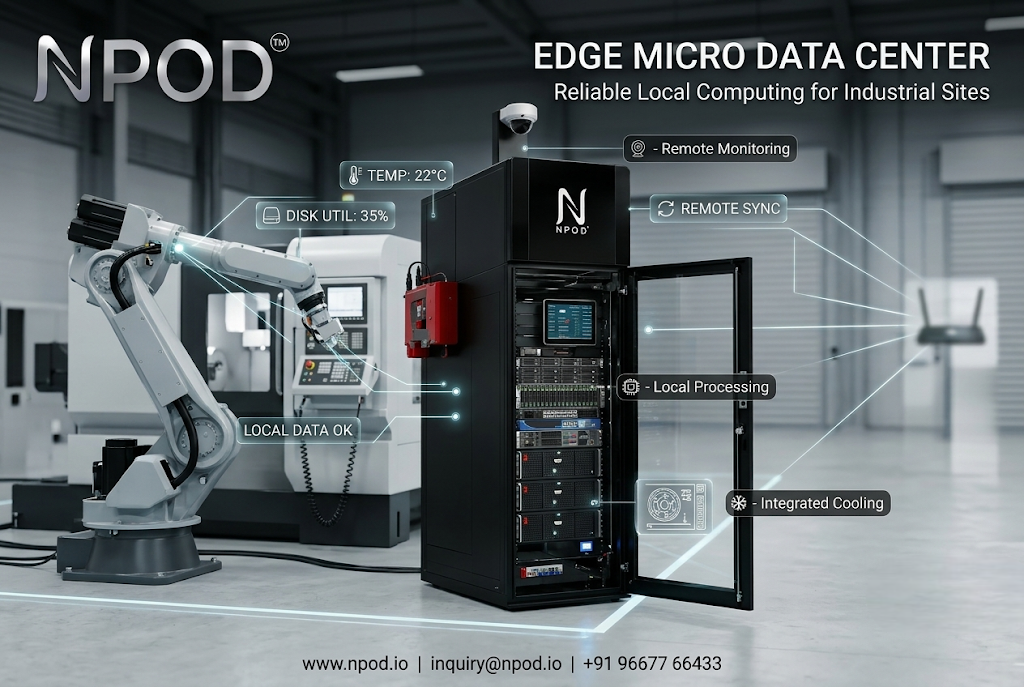
Industrial sites often depend on connected machines, monitoring systems and business applications to keep daily operations running. But what happens when a remote facility cannot maintain a stable connection to its central data center? An edge micro data center can help by placing computing, storage and supporting infrastructure closer to industrial operations. Businesses planning localized infrastructure can explore integrated edge data center infrastructure to understand how these systems support remote deployment.
Why Remote Industrial Sites Need Local Computing
Factories, mining locations, energy facilities and remote production units often operate far from major IT facilities. Their applications still need access to computing resources even when network connectivity is limited.
Consider a manufacturing facility that uses sensors to track machine temperatures and equipment performance. If its monitoring application depends entirely on a distant data center, a network interruption can affect access to important information.
This creates two challenges:
- Local applications may become dependent on an unreliable connection.
- IT teams may have limited visibility into infrastructure conditions at remote locations.
A localized computing setup can reduce these dependencies for selected workloads.
What Makes an Edge Micro Data Center Suitable for Industrial Locations?
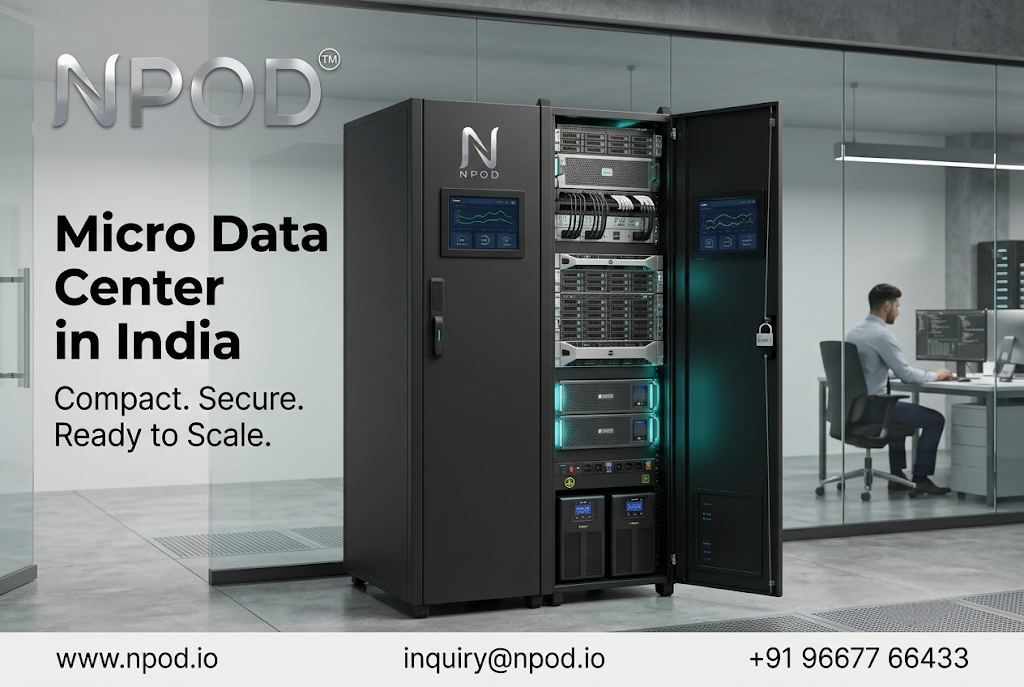
An edge micro data center is a compact infrastructure environment that brings computing and storage closer to the location where data is generated.
For industrial deployment, the value comes from combining IT equipment with the systems needed to support its operation.
Local processing for essential applications
Applications that need quick access to machine data can run closer to the equipment generating that information.
For example, a production monitoring system may process selected sensor readings locally. This reduces the need to send every request to a central facility before the application can respond.
Integrated infrastructure in a compact setup
Industrial locations may have limited space for conventional server rooms. An integrated infrastructure enclosure can bring servers, networking, power distribution and cooling into a coordinated setup.
This helps simplify infrastructure planning at locations where building a separate data center room is not practical.
Better visibility across remote facilities
Remote infrastructure still needs regular supervision. Environmental monitoring and remote management tools help IT teams observe important operating conditions without visiting every site for routine checks.
Five Infrastructure Factors That Matter in Industrial Deployment
Choosing equipment is only one part of the process. The installation environment also determines how well a local computing facility performs.
1. Power availability and protection
Industrial locations may experience different power conditions depending on their local electrical infrastructure.
Before deployment, businesses should assess available power capacity, expected equipment load and backup requirements.
Power distribution should match the needs of the installed IT equipment. Where required, suitable backup arrangements can help maintain operations during certain power interruptions.
2. Cooling under changing environmental conditions
Servers and networking equipment generate heat. If the cooling system cannot manage that heat, equipment may experience thermal stress.
Industrial sites can also have environmental conditions that differ from standard office environments.
The cooling design should therefore consider ambient temperature, dust exposure, equipment density and expected heat load. Precision cooling can help maintain suitable conditions for the installed infrastructure.
3. Environmental monitoring
A remote facility needs visibility into its operating environment.
Monitoring systems can help track temperature, humidity and other relevant infrastructure conditions. Alerts can also help IT teams identify potential problems before they develop into larger operational issues.
4. Fire protection and physical security
Remote installations need protection against environmental and physical risks.
Fire suppression systems help address fire-related threats. CCTV surveillance and access control can also support better physical security.
The exact configuration should depend on site conditions, equipment requirements and applicable safety standards.
5. Remote management and connectivity
A local data center should not become another facility that requires constant manual supervision.
Remote monitoring and management capabilities allow authorized teams to check infrastructure conditions and coordinate maintenance from another location.
Businesses should also plan how local systems will communicate with central IT platforms when network connectivity is available.
What Happens During a Network Interruption?
A local computing setup can help reduce dependence on continuous communication with a central data center. However, it does not automatically guarantee uninterrupted operation.
The result depends on how applications are designed.
For example, a factory may keep selected monitoring and data-processing workloads running locally during a temporary network interruption. Data can then be synchronized with central systems when connectivity returns.
To make this possible, businesses need to plan local data storage, synchronization methods and application dependencies before deployment.
This distinction matters. Infrastructure alone cannot provide application continuity if the software still requires a permanent connection to a remote service.
A Practical Deployment Example: A Remote Manufacturing Plant
Imagine a manufacturer operating a production facility outside a major city.
The plant uses connected equipment to monitor production conditions. Its IT team also needs access to operational information from a central office.
Instead of sending every processing request to a distant facility, the company can deploy local computing resources at the plant.
The infrastructure can support selected monitoring applications and store operational data locally. Important information can then be shared with central systems according to the company's network and application design.
An integrated setup with power protection, precision cooling, environmental monitoring and remote management can support this arrangement.
The business still needs a clear maintenance plan and suitable connectivity. But local computing gives the facility more control over workloads that need to operate close to production equipment.
How Should Businesses Plan Their Deployment?
Before selecting an infrastructure solution, industrial IT teams should answer these questions:
- Which applications must continue working during network interruptions?
- How much computing and storage capacity is required locally?
- What power and cooling conditions exist at the site?
- How will equipment be monitored remotely?
- How will local data synchronize with central systems?
- Can the infrastructure support future equipment expansion?
These answers help determine the right configuration rather than choosing equipment based only on rack size or server capacity.
Conclusion: Build Local Infrastructure Around Operational Needs
Remote industrial facilities need computing infrastructure that matches their operating conditions. A well-planned edge micro data center can support selected local workloads while keeping remote monitoring, power, cooling and security requirements within one coordinated infrastructure environment.
The right approach begins with understanding application dependencies and site conditions. Businesses planning remote or industrial deployments can explore NPOD's integrated edge data center infrastructure and evaluate a configuration that fits their operational requirements.
Frequently Asked Questions
1. Can an edge micro data center operate during an internet outage?
It can continue supporting locally hosted applications if those applications do not depend on unavailable remote services. Actual continuity depends on application architecture, local storage and power backup arrangements.
2. Why is precision cooling important for industrial edge infrastructure?
Servers generate heat during operation. Precision cooling helps maintain suitable temperature conditions and supports the reliable operation of installed IT equipment.
3. Can remote teams manage an edge micro data center?
Yes. With suitable remote monitoring and management systems, authorized IT teams can observe infrastructure conditions and manage supported operations without being physically present at the site.
About the author
- NPOD provides Edge Data Center solutions with power, cooling, monitoring, and protection for scalable distributed IT infrastructure across multiple locations.
Comments
Join the discussionNo comments yet. Be the first to comment.