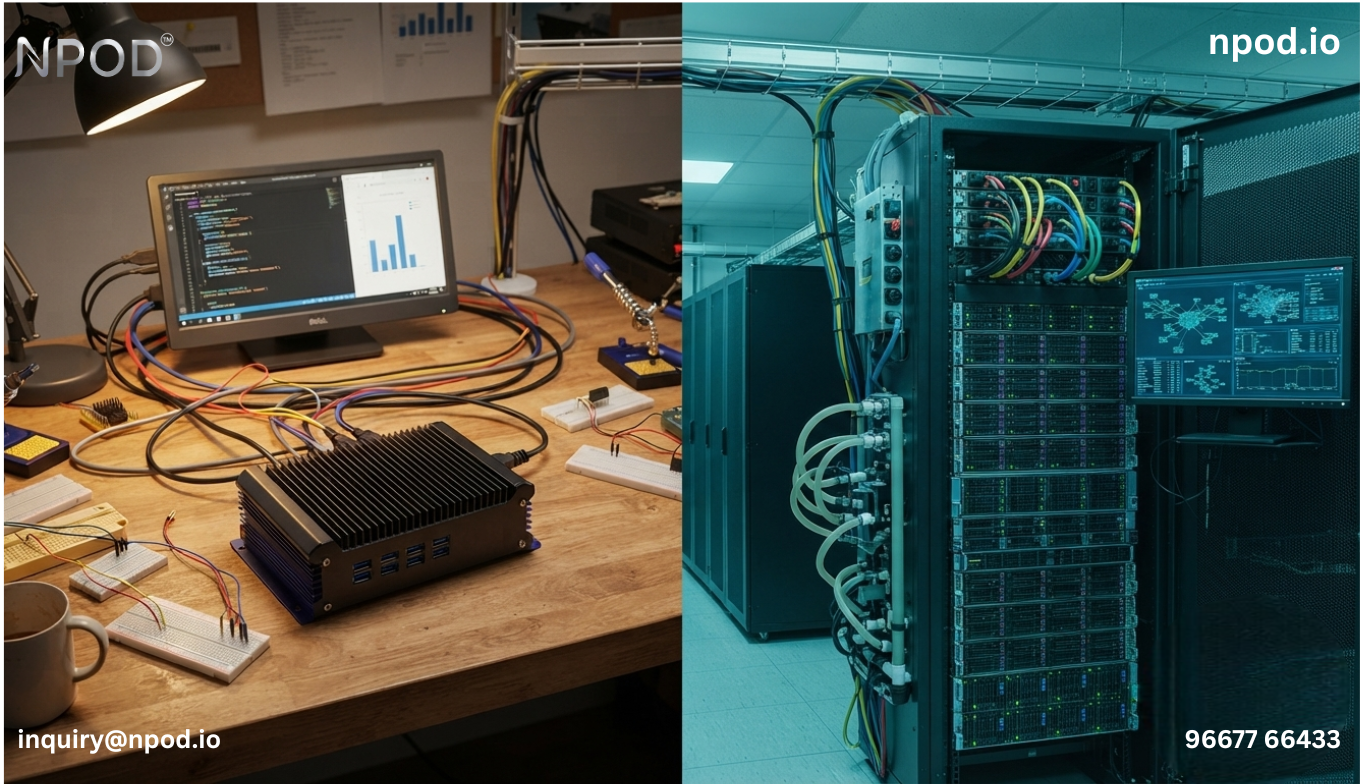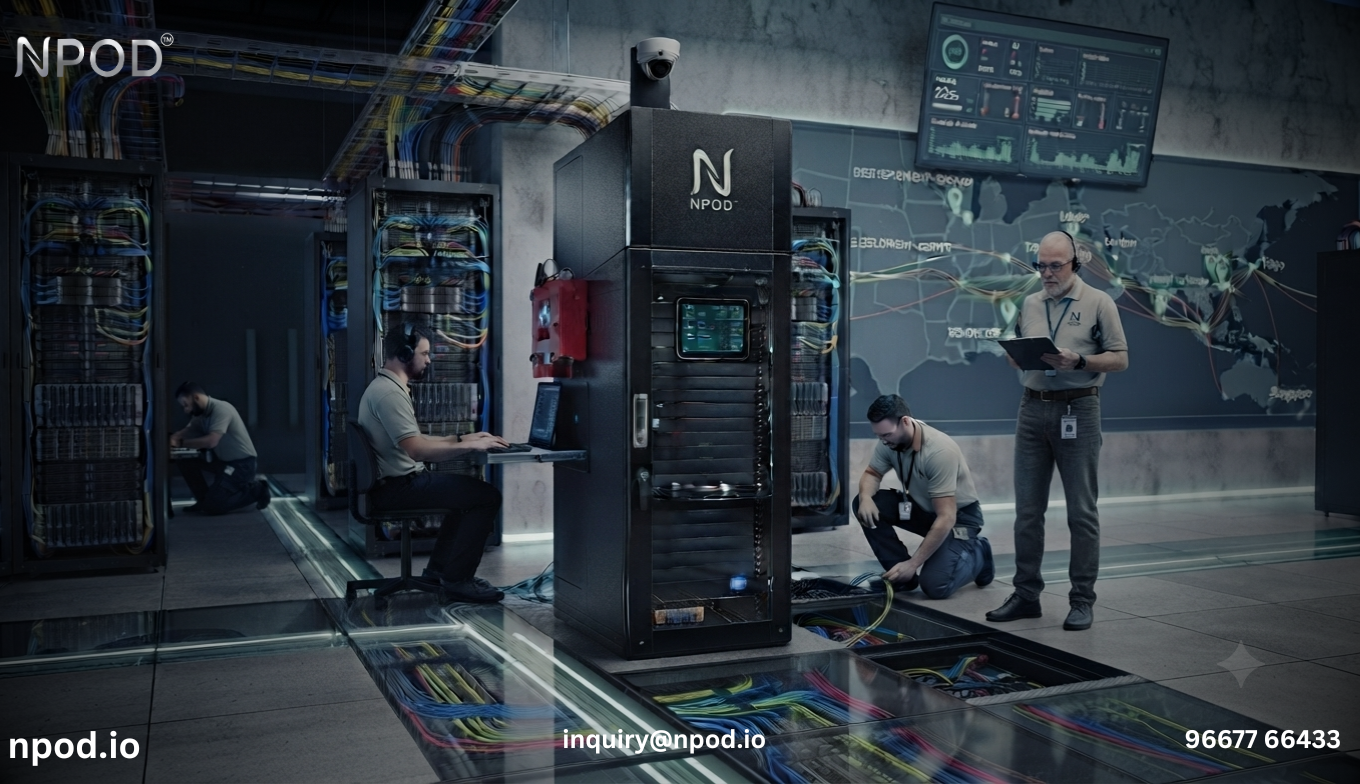
What Happens When a Data Center Needs to Grow Without Starting Over?
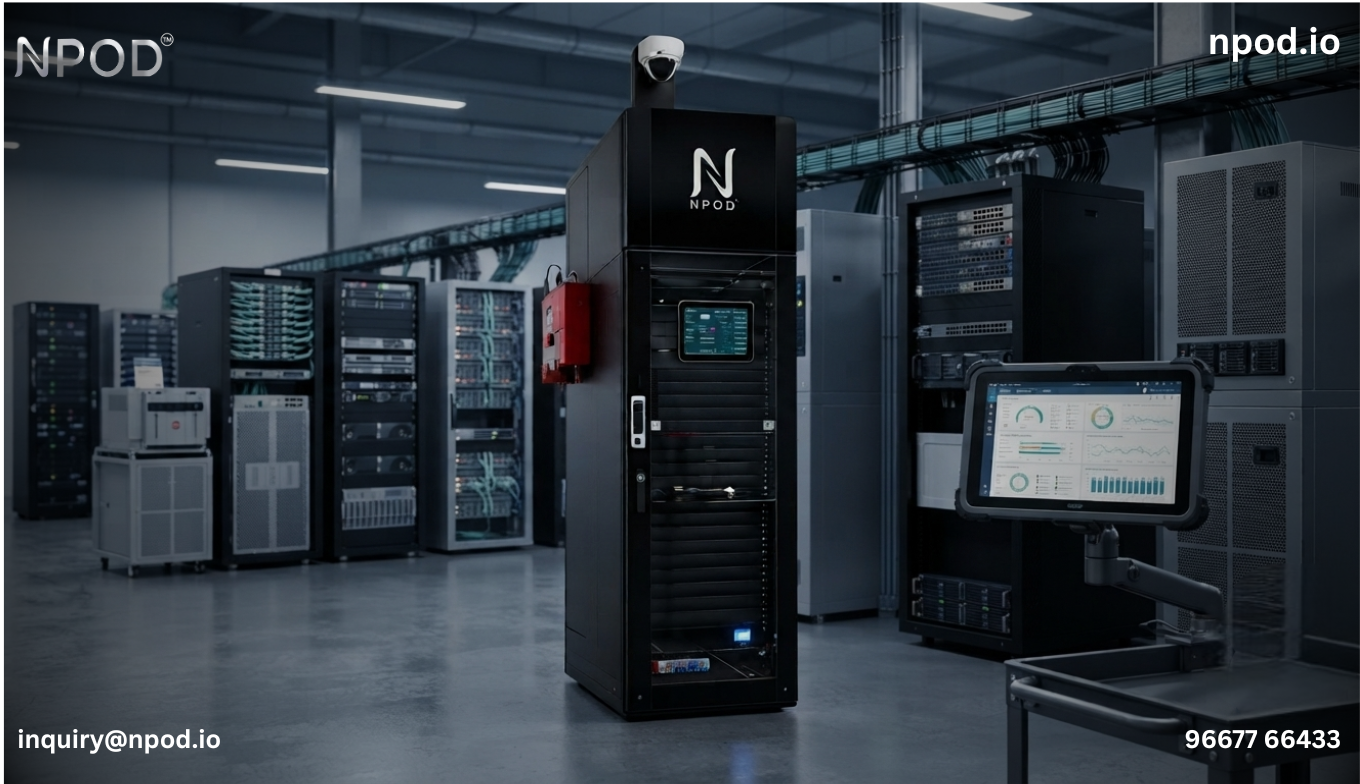
A growing IT environment creates an unusual problem: success can eventually make the existing data center too small.
More applications mean more servers. More users can mean more storage and network capacity. New workloads can increase power and cooling requirements. But when additional capacity is needed, does an organization really need to start over and build an entirely new data center?
Not necessarily.
This is one of the situations where modular data center solutions can provide an alternative approach. Instead of treating data center capacity as something that must be built all at once, modular architecture can allow organizations to think about expansion in stages.
The Problem With Planning Only for Today
Data center planning often involves a difficult balance.
Build too little capacity, and the environment may become constrained sooner than expected. Build too much, and an organization may spend resources maintaining capacity it does not currently need.
The challenge becomes even more complicated when future workloads are difficult to predict.
A business may begin with a relatively modest computing requirement and later introduce:
New enterprise applications
Larger databases
AI or analytics workloads
Additional storage
Virtualized environments
Edge computing deployments
New business locations
The resulting demand can change both the amount and type of IT capacity required.
This is why scalability needs to be considered during the original data center design rather than treated as an emergency project later.
What Does Modular Expansion Actually Mean?
A modular data center uses standardized or prefabricated components that can be deployed as part of a larger IT environment.
The important concept is not simply that a data center comes in modules. It is that capacity can potentially be planned and added in stages.
Instead of designing one large facility around an uncertain future requirement, an organization can establish an initial configuration and create a path for additional capacity.
That additional capacity may involve more computing space, racks, power, cooling, or other integrated systems depending on the architecture.
Why Adding Capacity Is More Complicated Than Adding Servers
It might seem that expansion simply means installing more racks and servers.
But every additional workload affects the systems supporting those servers.
More equipment can mean:
More power demand:
Electrical distribution needs to accommodate the additional load.
More heat:
Higher IT loads increase the amount of heat that needs to be removed.
More network traffic:
Additional applications and systems can increase connectivity requirements.
More physical space:
Expansion needs adequate room for equipment, cabling, maintenance, and supporting systems.
More operational complexity:
Monitoring and management need to cover the additional equipment.
This is why scalable data center design needs to consider the complete environment rather than only server count.
Power Capacity Can Become the Hidden Constraint
A business may have physical space for additional racks but discover that available electrical capacity is insufficient.
That can turn an apparently simple expansion into a much larger infrastructure project.
A scalable approach therefore considers current and projected power requirements during the planning stage.
Power distribution, UPS capacity, backup systems, rack-level power, and monitoring all need to be considered in relation to the expected IT load.
The objective is to make future growth technically achievable rather than simply leaving empty floor space.
Cooling Needs to Scale Too
Power and cooling are closely connected.
As computing capacity increases, thermal output increases as well. An expansion strategy that adds servers without accounting for heat removal can create operational problems.
Cooling capacity therefore needs to align with rack density and workload characteristics.
This becomes particularly important for high-density computing environments where a relatively small number of racks can generate substantial heat.
A modular architecture can help organizations consider cooling as part of the capacity expansion rather than treating it as a completely separate project.
Space Is Not the Only Thing That Needs to Be Planned
Physical layout affects how easily an environment can grow.
Expansion planning may need to account for:
Rack positions
Equipment clearances
Cable pathways
Power distribution
Cooling airflow
Maintenance access
Network connections
Security controls
Leaving an empty area in a room does not automatically make that area expansion-ready.
The supporting systems need to be capable of accommodating additional equipment as well.
Where Modular Data Centers Can Be Useful
The ability to add capacity progressively can be relevant across several scenarios.
Enterprise IT Growth
Organizations experiencing steady application and infrastructure growth may prefer to expand capacity according to actual demand rather than making a large upfront investment.
Edge Computing
Distributed applications may require computing resources at multiple locations. Modular environments can provide a structured way to deploy smaller computing facilities closer to users, equipment, or operational sites.
Remote Deployments
Some locations cannot support a large conventional data center. A modular approach can provide a more practical deployment model when space, construction resources, or site conditions are limited.
Specialized Workloads
High-density computing, analytics, and other demanding workloads can introduce new power and cooling requirements. Modular capacity can provide another option for accommodating these requirements.
Does Modular Mean Less Flexible?
The opposite can be true when the system is properly planned.
Modularity can provide a framework for adjusting capacity without redesigning an entire facility.
However, flexibility depends heavily on the original architecture.
Organizations should consider whether the proposed solution allows additional racks, power, cooling, networking, and supporting systems to be integrated later.
A modular label by itself does not guarantee scalability.
What Should Businesses Evaluate?
Before selecting a modular data center approach, businesses should look beyond the initial module.
Important questions include:
What is the current IT capacity requirement?
How quickly is capacity expected to grow?
How much additional power may be required?
Can cooling capacity scale with the IT load?
Is there sufficient physical space for expansion?
How will additional racks connect to the network?
How will the environment be monitored?
Can additional modules be integrated later?
What happens if workload requirements change significantly?
These questions help distinguish between a system that is simply compact and one that has genuinely been designed for scalable deployment.
Modular Architecture Is About More Than Physical Modules
The biggest value of modular data center design is not necessarily the physical structure.
It is the possibility of turning data center growth into a more manageable planning exercise.
Instead of asking, “How large should the entire facility be right now?” organizations can also ask, “What capacity do we need today, and how should the environment evolve as demand increases?”
That change in thinking can be useful for businesses dealing with uncertain growth, distributed workloads, changing technology requirements, or phased expansion.
Conclusion
A data center does not necessarily have to be replaced every time an organization's computing requirements increase.
With the right planning, modular data center solutions can provide a framework for adding capacity progressively while considering power, cooling, space, networking, security, and monitoring as part of the same expansion strategy.
The key is to design for growth before growth becomes a problem.
For organizations evaluating their next data center investment, the more useful question may not be, “How big should we build?”
It may be:
“How can we build today without limiting what we can add tomorrow?”
FAQs
1. What are modular data center solutions?
They are data center architectures that use modular or prefabricated components to create IT capacity that can be deployed and, depending on the design, expanded in stages.
2. Can modular data centers support future growth?
They can be designed with future expansion in mind, including additional computing space, power, cooling, networking, and supporting systems.
3. Are modular data centers suitable for edge computing?
They can be useful for edge deployments where organizations need computing capacity closer to users, machines, or operational locations.