Container Data Center: Solving Server Room Space Limitations
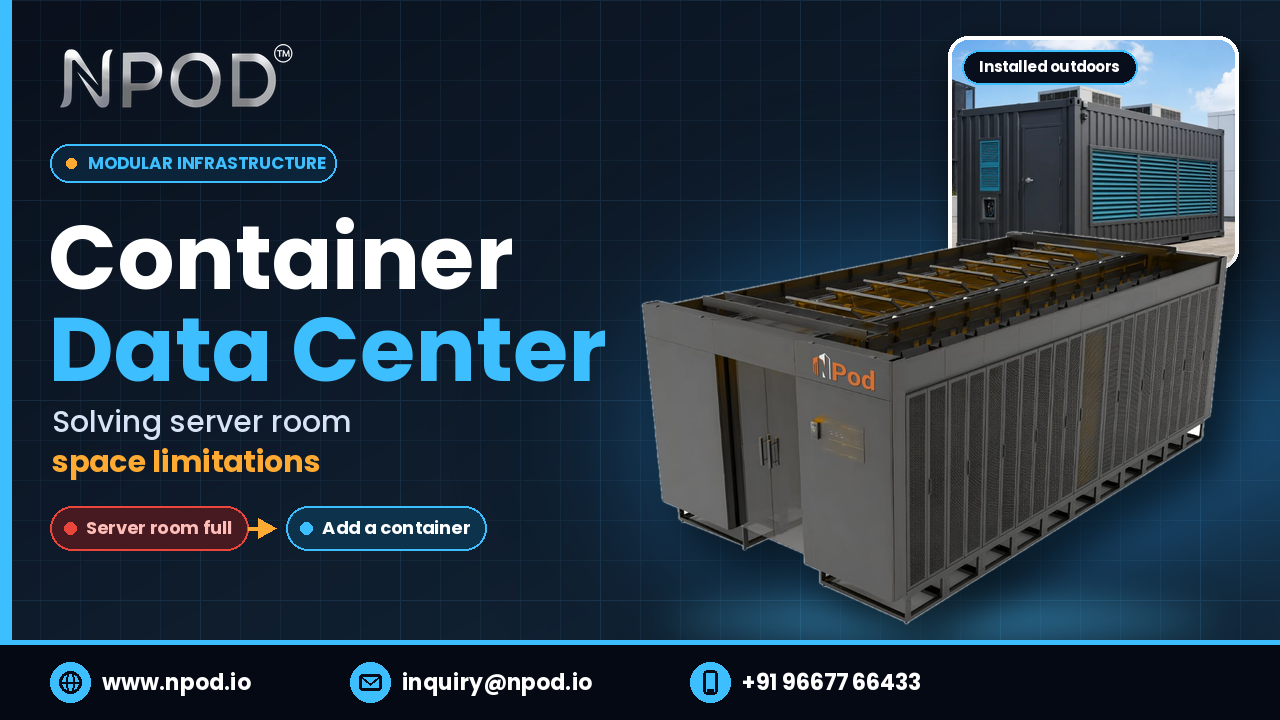
When an existing server room runs out of space, adding more IT equipment becomes difficult. Businesses may need additional racks, power capacity and cooling but have limited room for expansion. A container data center offers an alternative by placing essential IT infrastructure inside a prefabricated enclosure. It can provide dedicated space for additional servers without requiring the same approach as expanding an existing building. NPOD develops container data center solutions for business infrastructure, with configurations planned around IT capacity, power and cooling requirements.
Why Do Existing Server Rooms Run Out of Space?
Server room capacity is not determined by floor area alone. Every new rack adds requirements for power distribution, cooling, cable management and equipment access.
As businesses add servers and networking devices, the available space can become difficult to manage. Equipment may need to be placed closer together while maintenance access becomes more restricted. Cooling arrangements may also need changes to handle the additional heat generated by the hardware.
This creates a practical problem: the business needs more IT capacity but the existing room cannot comfortably support more equipment.
Expanding the room may not be simple. Building changes can involve site limitations, construction work and coordination with electrical and cooling systems. For facilities that cannot easily expand their existing space, another infrastructure arrangement may be worth considering.
How a Container Data Center Adds Dedicated IT Space
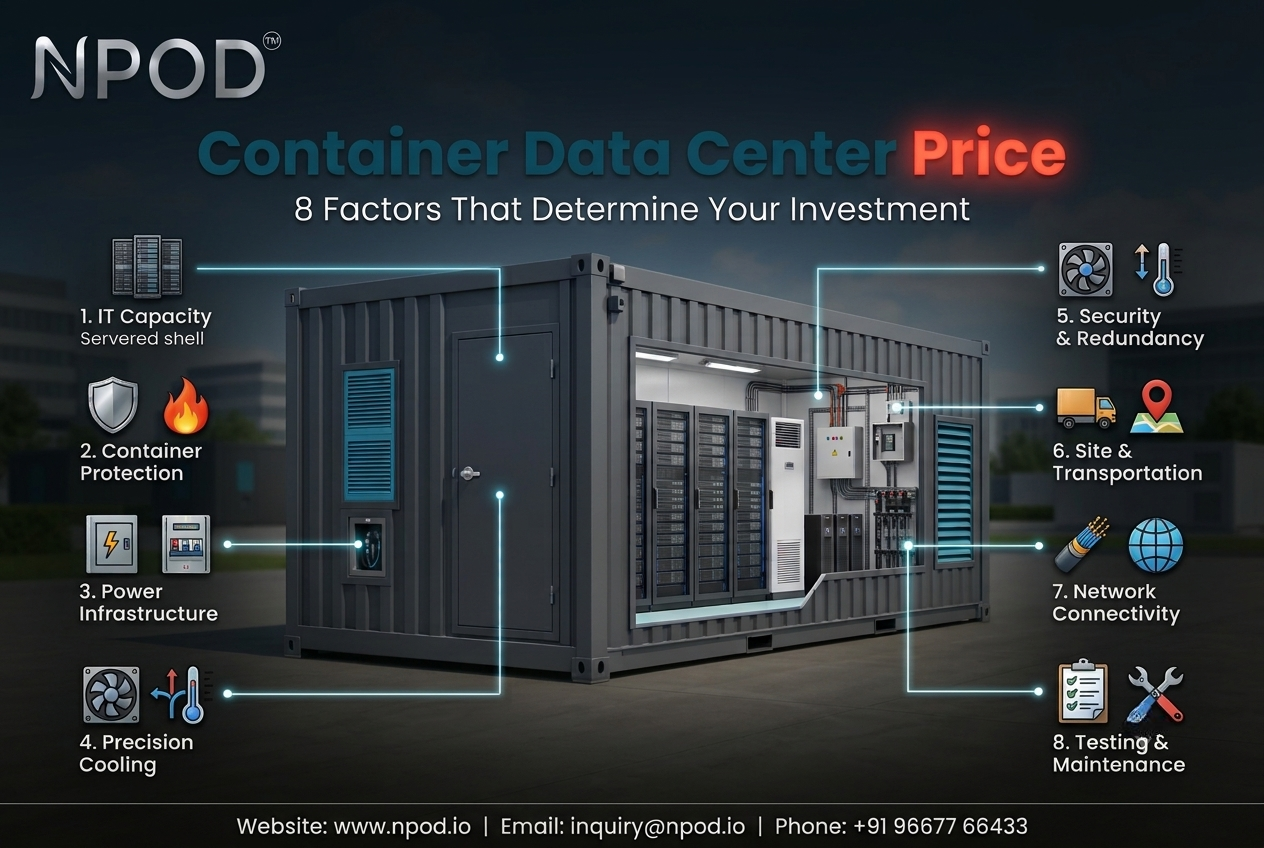
A container data center provides a separate prefabricated enclosure for housing IT equipment and its supporting infrastructure.
Instead of fitting every new server into an existing room, businesses can plan an additional IT environment within a dedicated enclosure. The layout can be designed around the required racks, power systems, cooling equipment and monitoring arrangements.
This approach separates the additional infrastructure from the space constraints of the existing server room.
It is particularly relevant when a facility has available outdoor or site space but limited room inside its main building. The final suitability depends on site access, environmental conditions, power availability and the planned IT load.
What Needs to Be Included in the New IT Space?
Adding another enclosure does not solve the problem by itself. The infrastructure inside it must support the equipment that the business intends to operate.
Server Racks and Equipment Layout
The rack arrangement determines how servers and networking equipment fit inside the enclosure. Planning should account for rack dimensions, equipment depth, cable routes and access for maintenance.
A clear layout also helps teams understand how much usable capacity is available for current equipment and possible future additions.
Power Distribution and UPS
Additional servers increase electrical demand. The new infrastructure therefore needs a power design based on the total connected IT load.
UPS systems provide backup power to connected equipment during interruptions. Their capacity and backup arrangements should match the planned infrastructure requirements.
Cooling for Additional Equipment
Servers generate heat during operation. Adding racks without enough cooling capacity can create unsuitable operating conditions.
Precision cooling should be planned around equipment heat output, rack placement and the environmental conditions at the installation site. Airflow management is also important because poorly planned airflow can reduce cooling effectiveness.
Monitoring and Physical Protection
The additional IT space needs suitable monitoring and protection systems. DCIM monitoring can provide visibility into infrastructure conditions such as power and temperature.
Physical access control helps manage entry to the equipment area. Fire detection and suppression systems should also be considered according to the project requirements and applicable standards.
What Should Businesses Check Before Expanding?
Before planning a container-based facility, infrastructure teams should understand the actual limits of their existing server room.
Start by identifying the number of additional racks required and the equipment that will occupy them. Calculate the expected power demand and cooling load rather than estimating capacity from floor space alone.
The installation location also needs review. Check whether the site has suitable access, space for placement, power availability and the conditions needed to operate the enclosure.
Finally, consider how the new infrastructure will connect with existing networks and operational systems. A separate enclosure should still fit into the wider IT environment.
A Practical Option for Server Room Expansion
Running out of server room space can restrict infrastructure growth even when a business has enough demand for additional IT capacity. A container data center offers another way to create dedicated equipment space without relying entirely on expansion of the existing building.
Its value depends on proper planning. Rack capacity, power distribution, UPS backup, cooling and monitoring must all match the intended workload.
NPOD provides container data center solutions that can be planned around these infrastructure requirements. For businesses facing physical space limitations in their existing server rooms, this model offers an alternative worth evaluating as part of their expansion planning.
Frequently Asked Questions
1. Can a container data center solve limited server room space?
It can provide a separate enclosure for additional IT equipment when the existing server room has limited expansion space. Site conditions and infrastructure requirements determine whether it is suitable.
2. Does a container data center include cooling and power systems?
A configured solution can integrate server racks, power systems, UPS and precision cooling. The exact components depend on the project specifications.
3. What should be assessed before installing one?
Businesses should assess IT load, rack capacity, electrical supply, backup power, cooling requirements, site access and monitoring needs before finalising the infrastructure design.
About the author
- NPOD provides Edge Data Center solutions with power, cooling, monitoring, and protection for scalable distributed IT infrastructure across multiple locations.
Comments
Join the discussionNo comments yet. Be the first to comment.