Enterprise AI Infrastructure for GPU Computing
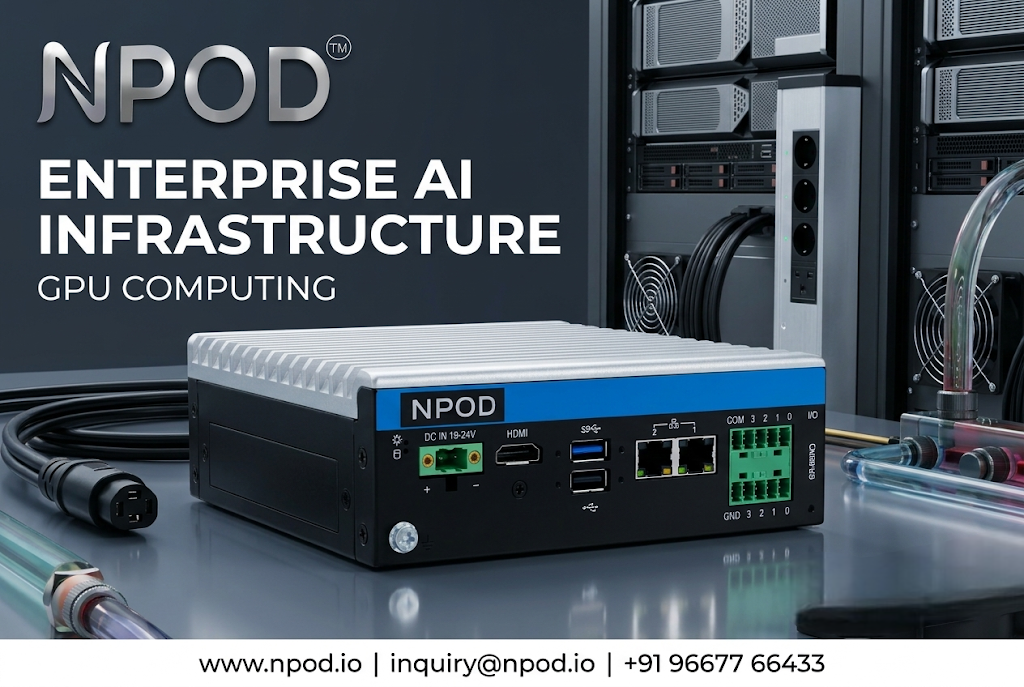
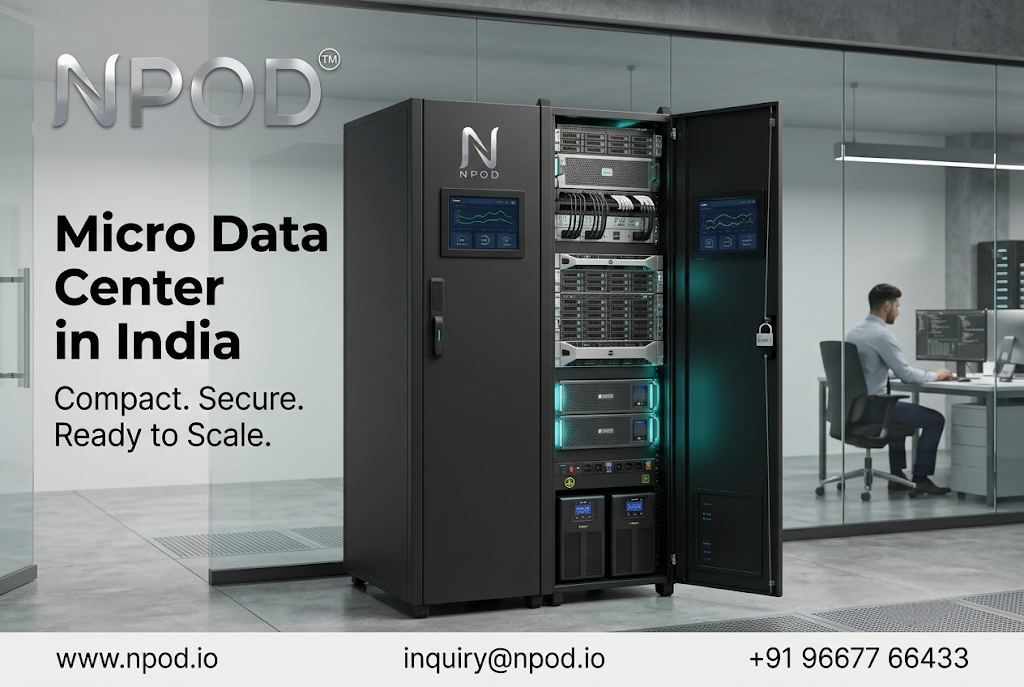
Running AI workloads at an enterprise level requires more than installing powerful graphics processing units (GPUs). Organizations also need suitable cooling, reliable power, physical security and infrastructure management. Enterprise AI Infrastructure brings these requirements together to create a suitable environment for AI training, inference and other GPU-intensive applications. One example is NPOD MIMO, an integrated AI computing appliance for enterprise workloads, which combines GPU-ready computing with supporting infrastructure components in one deployable product.
Understanding how these components work together helps businesses plan GPU deployments without treating computing hardware and its supporting systems as separate concerns.
What Is Enterprise AI Infrastructure?
Enterprise AI infrastructure is the combination of hardware and supporting systems used to develop, train and run artificial intelligence applications.
Its main components include:
- GPU servers for parallel computing.
- Memory and storage for handling large datasets.
- Cooling systems for managing hardware temperatures.
- Power management for stable operations.
- Security controls for protecting computing equipment.
- Monitoring tools for tracking infrastructure conditions.
Unlike a basic server environment, AI infrastructure must account for the demands of GPU-intensive workloads. These workloads can involve large datasets and continuous computing operations.
Why Does GPU Computing Need More Than a Powerful Server?
GPUs are designed to perform many calculations simultaneously. This makes them useful for deep learning, neural networks, image processing and large language models.
However, adding more GPU capacity also increases the demands on the surrounding infrastructure.
1. Heat Management
GPU-intensive operations generate heat. When multiple GPUs operate in a server environment, cooling becomes an important part of infrastructure planning.
Inadequate thermal management can lead to higher operating temperatures and thermal throttling. This can affect computing performance.
Cooling capacity and airflow should therefore be considered alongside GPU selection.
2. Power Requirements
GPU servers need suitable electrical infrastructure to support their computing hardware.
Organizations must assess power distribution, protection and backup requirements before deployment. Power planning also becomes more important when infrastructure expands to support additional GPUs.
3. Infrastructure Coordination
A typical GPU deployment involves several connected systems. Server hardware, cooling equipment, power protection and security controls must work together.
Managing each component separately can increase installation and maintenance work. This is one reason businesses consider integrated AI infrastructure appliances.
What Is NPOD MIMO?
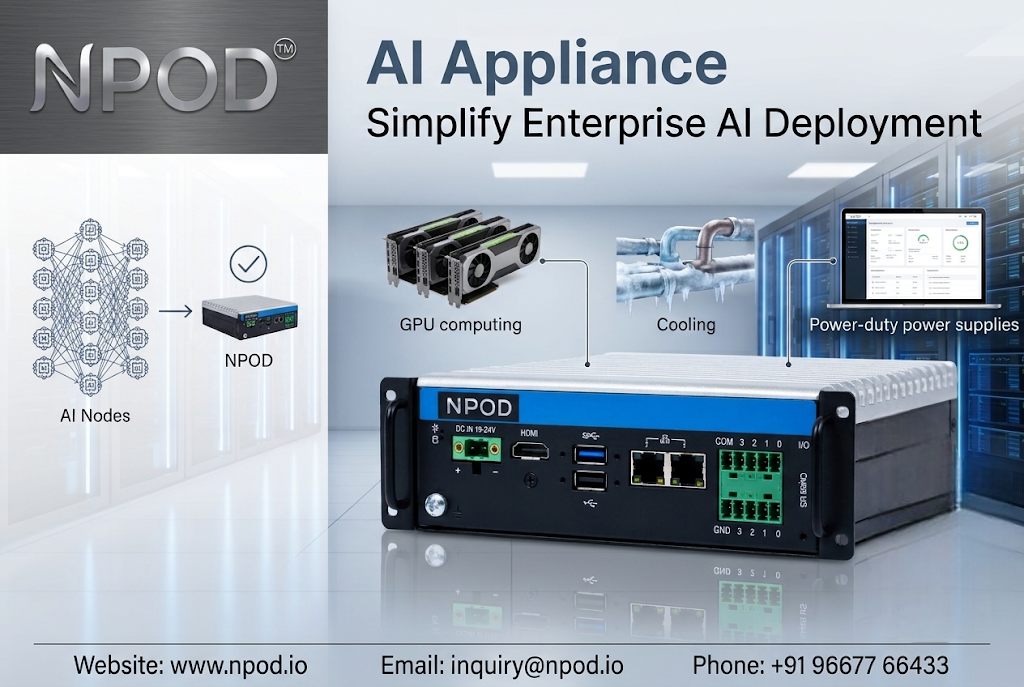
NPOD MIMO is an integrated AI computing appliance designed for enterprise AI workloads.
In simple terms, it brings GPU-ready computing and supporting infrastructure components together in one deployable product. Rather than treating the GPU server, cooling system, power protection and physical security as entirely separate installations, the appliance combines these elements into a coordinated infrastructure setup.
Its listed capabilities include:
- GPU computing: Support for NVIDIA RTX GPUs, NVIDIA L40S and NVIDIA H200 configurations.
- AI appliance: Deployment options for private AI servers, edge AI and local AI processing.
- Cooling: Integrated cooling provisions for managing heat from demanding computing workloads.
- Power protection: Power management features for supporting infrastructure operations.
- Physical security: Infrastructure protection for enterprise environments.
- Centralized management: Monitoring capabilities for infrastructure oversight.
The actual GPU configuration depends on the selected deployment. The product page also mentions support for future NVIDIA Blackwell architectures.
The important distinction is that NPOD MIMO is not simply another name for a GPU server. It is an infrastructure appliance built around AI computing and the supporting systems required to operate it.
What Can Businesses Use This Infrastructure For?
Enterprise GPU infrastructure supports several types of AI applications.
AI Model Training
Training machine learning models involves processing large amounts of data and performing repeated calculations. GPU computing helps handle these parallel processing requirements.
AI Inference
Once a model is trained, it needs computing resources to process new inputs and generate results. GPU infrastructure can support inference workloads that require significant processing capacity.
Generative AI and Large Language Models
Organizations running generative AI applications may need dedicated computing resources for model execution and internal AI services.
Video Analytics
Computer vision applications use AI models to analyze images and video. Manufacturing facilities and other enterprises can use these workloads for visual inspection and monitoring.
Private AI Environments
Some organizations prefer to run AI applications within their own infrastructure rather than relying entirely on external cloud platforms. This can provide greater control over data access and deployment decisions.
When Does an Integrated AI Appliance Make Sense?
An integrated appliance can be useful when a business wants to simplify the infrastructure planning and deployment process.
For example, a manufacturing company may want to introduce AI-based quality inspection on its production floor. It needs GPU computing to process visual data but must also consider cooling, power and equipment protection.
Similarly, a research organization may need a dedicated environment for machine learning experiments.
In these situations, a product such as NPOD MIMO provides an option to consider because it combines computing and supporting infrastructure within one deployment.
However, organizations should first assess GPU capacity, workload requirements, power availability, cooling needs and future expansion plans. An integrated appliance is not automatically suitable for every AI deployment.
Conclusion
Enterprise AI infrastructure is not just about selecting a high-performance GPU server. It involves creating an environment where computing hardware, cooling, power management and security work together.
NPOD MIMO is an example of an integrated AI computing appliance that brings these infrastructure elements together for enterprise workloads. Understanding its design helps businesses evaluate whether this type of deployment fits their GPU computing requirements.
The right choice ultimately depends on the applications being developed, the required computing capacity and the organization's infrastructure plans.
Frequently Asked Questions
1. What is the difference between a GPU server and an AI appliance?
A GPU server is primarily a computing system equipped with GPUs. An AI appliance combines computing resources with supporting infrastructure and deployment components to provide a more integrated setup.
2. Does enterprise AI infrastructure support both training and inference?
Yes. GPU-based infrastructure can support AI model training as well as inference. The required configuration depends on model size, workload intensity and performance needs.
3. What is NPOD MIMO used for?
NPOD MIMO is an integrated AI computing appliance designed for enterprise workloads. Its listed use cases include AI training, inference, private AI, generative AI, video analytics and edge AI.
About the author
- NPOD provides Edge Data Center solutions with power, cooling, monitoring, and protection for scalable distributed IT infrastructure across multiple locations.
Comments
Join the discussionNo comments yet. Be the first to comment.