Prefabricated Data Centers: Rethinking How IT Capacity Expands
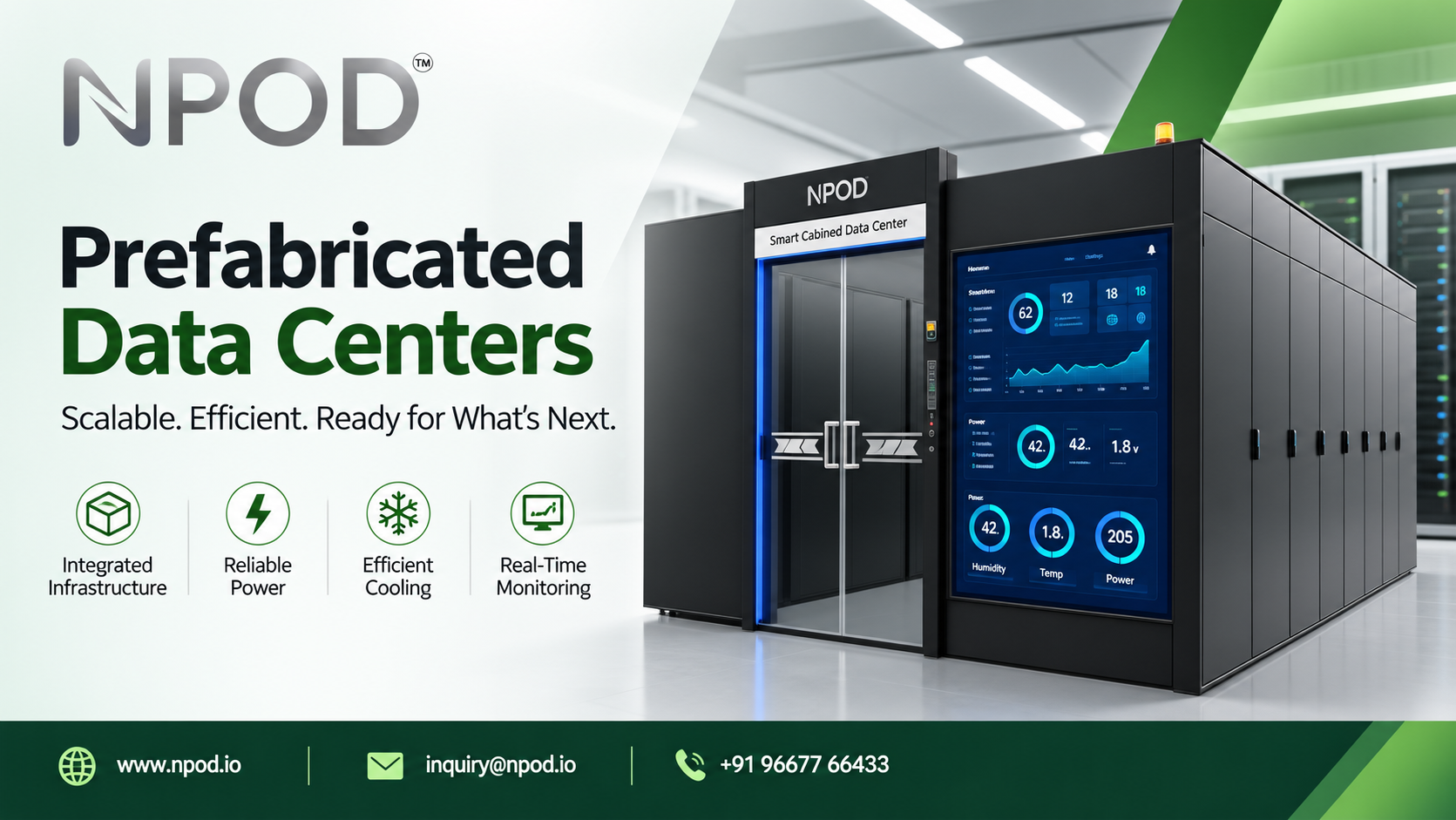
A business does not always need a bigger data center building when its IT requirements grow. Sometimes it needs additional rack space. In other cases, the limit is electrical capacity, cooling performance or the time required to prepare a new facility. Prefabricated data centers offer another way to approach these expansion decisions by bringing integrated infrastructure into a prepared deployment.
The idea is not simply to install more servers in less space. It is to rethink how computing capacity can be added, how different infrastructure components work together and how future expansion fits into an organization's wider IT strategy.
The Problem With Expanding Only When Space Runs Out
Data center expansion often starts with a visible problem. Racks are filling up, applications need more computing resources or a new business service requires dedicated infrastructure.
However, physical space is only one part of the equation.
An existing facility may have room for additional racks but insufficient power capacity to support them. Its cooling system may also be approaching its limits. Even when the building can accommodate more equipment, electrical upgrades, cooling changes and installation work can extend the project timeline.
These constraints can make a seemingly straightforward expansion more complicated.
Businesses therefore need to assess capacity across several areas: floor space, power distribution, cooling, connectivity and operational support. Adding servers without considering these dependencies can shift the bottleneck rather than solve it.
This is where the design of the expansion becomes as important as the amount of capacity being added.
Capacity Can Be Planned in Stages
Traditional facility expansion can involve coordinating several construction and infrastructure activities before new equipment becomes operational. That approach may be appropriate for major projects, but it is not the only option.
A prefabricated data center brings selected infrastructure components together in a factory-integrated design. Depending on the configuration, the system can include equipment racks, power distribution, UPS systems, cooling and monitoring.
This allows organizations to evaluate an additional infrastructure unit as part of their capacity plan.
For example, a company may expect its computing requirements to increase over several years. Rather than designing every expansion around a single large facility project, its infrastructure team can assess whether separate deployment phases would better match the expected demand.
Each phase still requires proper planning. The site needs sufficient power, suitable environmental conditions and the required network connections. The infrastructure must also support the equipment and availability requirements of the intended workload.
Phased expansion is not automatically cheaper or faster. Its value depends on whether the project benefits from separating capacity additions into manageable stages.
What Standardization Changes
When infrastructure is expanded repeatedly, consistency becomes an important operational concern.
Different projects can end up using different rack layouts, power arrangements, cooling equipment and monitoring methods. These variations may increase the work required to maintain and support the environment.
A standardized infrastructure design offers a way to reduce that variation.
With prefabricated data centers, selected components and layouts can be defined around a repeatable design. This can help infrastructure teams coordinate procurement, installation and maintenance across similar deployments.
Standardization also creates a clearer basis for planning future additions. Teams can evaluate whether a later unit should follow an existing configuration or whether changes are needed to accommodate a different workload.
However, repeatability should not mean ignoring site conditions. A configuration suitable for one location may need adjustments elsewhere because of differences in available power, ambient temperature, network access or environmental exposure.
The goal is to standardize the parts that benefit from consistency while adapting the design where the project requires it.
The Trade-Offs Businesses Need to Understand
Prefabricated infrastructure changes how an expansion can be organized, but it does not remove the engineering decisions involved.
Existing infrastructure still matters
A new unit must connect with the organization's current network and operational systems. Teams need to understand how workloads will communicate with existing applications, storage and security platforms.
They should also establish who will monitor the new environment and how incidents will be handled.
Power and cooling determine practical capacity
The number of racks a unit can accommodate does not reveal how much computing equipment it can support. Actual capacity depends on the equipment's power demand, the distribution system and the cooling design.
Businesses should evaluate the expected IT load before selecting a configuration. They should also account for backup power and the availability requirements of the applications.
Site preparation remains necessary
Factory integration does not eliminate delivery and installation requirements. The site may need foundations or a suitable supporting surface, electrical connections, network access and sufficient clearance for installation and maintenance.
Transport access and local environmental conditions also affect feasibility.
Total project cost needs a wider view
Comparing options only by their initial purchase price can produce an incomplete result. Businesses should consider site preparation, electrical work, cooling, connectivity, ongoing maintenance and future expansion.
For some projects, upgrading an existing facility may be the better option. Others may benefit from a separate prefabricated deployment. The comparison should reflect the complete project scope rather than assumptions about one infrastructure model.
When Does Prefabricated Infrastructure Make Sense?
The approach is worth evaluating when an organization needs additional capacity but wants to avoid treating every expansion as a conventional construction project.
A growing enterprise may need a separate environment for a new application or business unit. An industrial company may require dedicated computing infrastructure near its operations. A business with several locations may also want a consistent approach to deploying IT equipment across selected sites.
In each case, the decision depends on the workload and operating conditions.
A prefabricated unit may be less suitable when an existing facility has sufficient capacity and can be upgraded with limited disruption. It may also be unnecessary for workloads that can be accommodated more effectively through cloud services or colocation.
The right comparison should consider deployment requirements, operating costs, expansion plans and the level of control the organization needs over its physical infrastructure.
NPOD provides prefabricated data center infrastructure for organizations evaluating integrated deployment options. Its suitability for a particular project depends on the required configuration, site conditions and the equipment the environment needs to support.
Conclusion
Data center expansion is not simply a question of finding space for more servers. Power, cooling, connectivity and operational support all influence how much usable capacity a facility can provide.
Prefabricated data centers give businesses another option for organizing that growth. They can support a phased approach when a suitable design allows additional infrastructure to be introduced as requirements change.
The important decision is whether the deployment model fits the organization's workload, site and long-term capacity plan. Infrastructure should be expanded according to operational needs, not just the amount of equipment waiting to be installed.
Frequently Asked Questions
Can prefabricated data centers support phased capacity expansion?
Yes. They can be considered for phased expansion when the design, site capacity and deployment plan allow additional units or infrastructure to be introduced as demand grows.
Can prefabricated infrastructure connect to an existing data center?
Yes. It can be integrated with existing environments when network connectivity, power arrangements, security controls and operational management are designed to work together.
What determines whether a prefabricated data center is cost-effective?
The decision depends on the full project cost, including the unit, site preparation, power, cooling, connectivity, maintenance and future expansion. These costs should be compared with upgrading an existing facility or choosing another hosting model.